Monday, April 8, 2013

GAME OF THRONES 3.02 - "DARK WINGS, DARK WORDS"

GoT
Programming Note:  These reviews will be written from the perspective of someone who has not read the books.  So we’re not going to mention the books, at all, and would ask that the comments don’t either.  Thanks to all you literate mofos in advance.  Also it means I’m going to misspell some names.

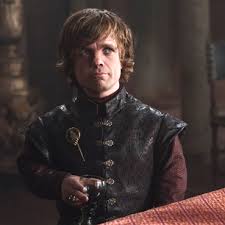
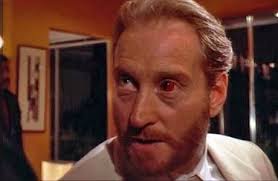
“Dark Wings, Dark Words” is another highly scattered but highly entertaining installment of HBO’s current magnum opus.  This week we have to do without anything at all relating to the Dany or Stannis storylines, and even with significant goings-on in King’s Landing, there’s no sign of Tywin, Bron or any of the Small Council.  And only one scene with Tyrion, because apparently that is the minimum amount of Dinklage the FDA will allow for public consumption in a single serving of Game Of Thrones.

 tyrion
 A dangerously lax standard, in my opinion

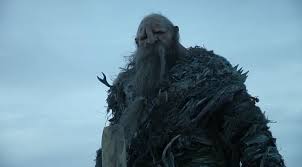
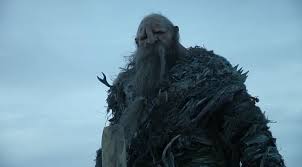
We also only took a brief stop beyond the wall this week, without much that could be mistaken for narrative progression (and alas, no FUCKING GIANTS).  Sam is still a liability, and Jon is still marching with the Wildlings, still finding new things to not know things about.  This time it’s wargs, people who can possess animals.  Gareth from The Office is one, as is young Brandon Stark.
Well, maybe not so young anymore.  It’s a bit awkward that Bran’s voice has changed overnight (in story time), but such are the realities of making television, I suppose.  We’ve known or suspected that he had such abilities for some time, so the bigger development on this front is the appearance of Jojen and Meera Reed, young siblings possessed of preternatural composure and in Jojen’s case, The Sight.  I don’t know what’s in store for these new characters, but I worry for their safety once he’s taught Bran a little about how to warg it up; narratively speaking, how much use is there for two seers in one storyline?  Bran and Rickon have never grabbed me too much as characters, so I hope that the new kids stick around and continue breathing some life and intrigue into that plotline.

 jojen
 But my own psychic powers say the 
average  gueststar has maybe 3 episodes 
between introduction and brutal murder
 
All the Starks are on the move as well, and some of the funnest parts of the episode involve Arya, Gendry, and the roly poly they cart around with them encountering the Brotherhood Without Banners.  We heard a fair amount about the Brotherhood last year, but hadn’t seen them, and I like them a good deal already.  Anyone who gave Tywin and The Mountain so much trouble is obviously doing something right, and they have personality and style, particularly the archer that threatened the fat boy with a move that would’ve felt right at home in an episode of Justified, and brought the Hound in to blow Arya’s cover.

I am glad to have The Hound in the mix again, though I’m a little confused as to his current position.  He seems on almost friendly terms with the Brotherhood’s leader, but given their enmity of his House and their masters, I doubt they’ll just be sending him on his way.  Which is great, because I want to see Arya and the Hound interact for at least a few episodes.  He is on her official shit list for standing by while her father was killed, but he’s a fugitive too now and would actually make a natural progression in her string of martial mentors, from the largely academic exercises with her “dancing master” to the murderous but courteous and professional Jaquen, to this hulking beast who just likes killing because it’s what he’s good at.  Of course, he’d say that was all it really was for the other guys anyway, whatever artsy terms they used to dress it up.  And The Hound’s sentiment can be awfully hard to read, so who knows if any warm feelings he had for her sister that will carry over.

Speaking of the sister, Sansa gets some of the best scenes of the episode, although that’s mainly down to Diane Rigg’s straight-shootin’ Tyrell matriarch Olenna.  She makes an immediate impression, disarming Sansa by running down her own family and appealing to her inherent Stark-ness, which compels the poor girl to honesty when every sensible cell in a person’s body should be screaming at them to just keep their mouth shut.  It’s not even that I think the Tyrells mean her any particular harm, I’m just dead certain they will sell her out the very second there’s anything to be gained from it.

 orella
 “I was too much woman for your grandfather in 
the 60s. I am still too much for you now.”

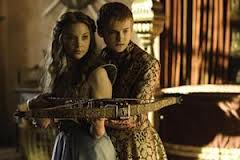
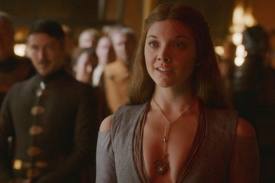
The Tyrells make the biggest impressions of the episode, as the old lady is clearly a force to be reckoned with, and no wilting flower to judge by her drier-than-burnt toast reaction to the news that Joffrey is, to put it lightly, a monster.  It’s hard not to love the old broad right away, and as much as I’d like to see some of the badass warriors the show has accumulated face off against each other, right now the clash I’m most eager to see is the epic snipe-off sure to ensure when she meets Varys.  Her granddaughter, meanwhile, gets the most unsettling scene, as she quickly adapts her seduction attempts with Joffrey to his particular lusts, which are less sexual and more sadistic.  I like Marge, I think, but she has very quickly revealed herself to be a serious contender for most dangerous person in King’s Landing, no mean feat with the likes of Tywin, Bron and Cersei slinking about.

 mar
 Ah, isn’t that…stomach-turning?

Meanwhile,….somewhere, Theon is being tortured, by…someone.  There’s not much else to say about this since we’re as in the dark as he is about the where and who and why of it, but I have a suspicion that the guy claiming to have been sent by his sister to help him is really just there to add a psychological element to his torment by dangling hope in front of him.  But whatever the motivation, it’s not like he didn’t earn a few thumbscrews and what have you.  You can just go ahead and rot there for a bit, Theon, and your sister can come save you once we’re completely sure there isn’t something else we’d rather be watching her do.

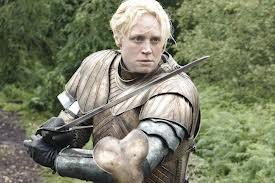
But the episode, in contrast to the last one, saves the best for last, with the latest installment of Jaime and Brienne’s odd couple road show.  I love this stuff, as Gwendolyn Christie and Nicolaj Coster-Waldau have a mismatched chemistry that brings a completely different tone to their scenes than the rest of the show, in the best way possible.  Plus it gives us a chance to see two of those badasses I was talking about throw down, a treat we had been denied since Jaime and Ned dueled early in season 1.  Jaime is not at his best, of course, being manacled and having spent a good portion of his time lately lashed to a post and shitting in his pants. But it’s a great bit of fight choreography anyway with some nice character shading with how she is all business while he can’t stop needling her even when he’s losing.

brienne

In a way, they both lose the fight, as before Brienne can re-secure her prisoner, they are found by a hunting party of House Bolton, Robb’s most ruthless bannermen, who were tipped off by a passerby that Brienne was not ruthless enough to murder just in case he went and did exactly that.  This is bad news for both their plans.  But good news for me, because it will keep them on the road together a bit longer, preserving what is currently my favorite dynamic on the show.

Is it next Sunday yet?  Oh, come on!

game

Monday, April 1, 2013

GAME OF THRONES 3.01 - "VALAR DOHAERIS"

Programming Note:  These reviews will be written from the perspective of someone who has not read the books.  So we’re not going to mention the books, at all, and would ask that the comments don’t either.  Thanks to all you literate mofos in advance.  Also it means I’m going to misspell a lot of  new names.

It’s good to be back in Westeros.  Well, maybe not so much “good” as “harrowing and occasionally sickening,” but nonetheless, this was my most anticipated pop culture event of the year (at least until Breaking Bad returns for its home stretch), and it did not disappoint.  We are welcomed back with our first pre-credits sequence since the pilot, which also featured a White Walker attack.  When the credits do kick off, we are treated to about a dozen new names, a new map section in Astapor and a nifty effect of a ruined, smoking Winterfell.

After that it’s a whirlwind tour to reintroduce us to as many of the main characters as the show can fit into an hour, with easily half a dozen important folks (Arya, Theon, Varys, The Hound, Bran and Osha, Brienne and Jamie) not even making the cut.  But we did get to see ice zombies, warlock children, flying, fire-breathing dragons, armored super-soldiers and FUCKING GIANTS.  I love this season already.

giant

Seriously, I outright cackled with glee at the matter-of-fact presentation of the giant in the Wildling camp.  It’s hard to tell when we’ll get a pay off to that, as the show hasn’t been in any big hurry to pack episodes full of dragon/zombie action even after they introduced those creatures; heck, even the army of Walkers we ended last season on is back to being an off-screen threat. Presumably in a year or two they’ll lumber their way into the vicinity of some characters we care about.

But I’m not even griping about that, since watching those characters bounce off each other is as gripping as ever, giants or no.  Staying north of the wall, Jon Snow has never been my favorite character, and the Night’s Watch storylines always felt like they were treading water until the high fantasy elements are ready to really kick into gear.  This episode was immediately promising, though, with the introduction of the very-welcome Cirian Hinds as the King Beyond The Wall, and his lieutenant Toman Giantsbane, which sounds like the Westerosi version of a porn name.
Rayder seems pretty sharp, so I’m not sure how much he’s buying Snow’s act, but the bastard did make a surprisingly cogent case for why he should want to ditch the Crows and fight for the living (who will let him touch girls).  I’m sure he’ll come down on the side of his oaths and duty in the end, being his father’s son, but fraternizing with his pretty new friend will surely lead to some angst about the whole deal in the weeks to come.  Also, there’s giants and Cirian Hinds.  This automatically makes this episode’s Jon story better than the last two years.

rayder

Also immediately more promising than last year is Dany’s plotline, which has her taking definitive steps toward taking back the Iron Throne.  Last season let her languish in Qarth the entire time, which while stylishly presented, was uneventful enough to feel like the narrative shallow end compared to all the goings on around the capital.  I may be alone in thinking this, but to me the least interesting thing about her is HER DRAGONS! (as she was good enough to shout for us a few dozen times last year).  So I like that she’s recruiting the Unsullied to get things going, which suggests that she’s going to rely mostly on more traditional forms of medieval warfare to invade Westeros rather than just riding a dragon straight into the throne room.  The Unsullied may have a slightly fantastical tint to just how thoroughly robotized their training makes them, but they are in essence a mercenary force, that can be fought and killed by the soldiers of any of the other various warlords of Westeros.  Full-bore dragons seem more like bringing F-22s to Agincourt, and has the potential to tip the balance way too far in Dany’s favor, when what I most want to see is her jockeying for position on roughly equal footing with the various Lannisters, Tyrells, Starks and so forth.

Dany also gets a boost just for getting closer to her ultimate goals, and having finally found another established character to play off of with the arrival of Barristan Selmy on her side of the pond.  Not that Jorah is ever less than great, but since Drogo fell from his horse her plots have been filled out by thinly-sketched members of her entourage and placeholder antagonists. But I will say, as interesting as the stuff with the Unsullied and the revelation that the warlocks of Qarth are not done with her yet was, the one mistake I think the episode made was ending on Selmy’s reveal.  I gather that he’s hot shit because all the book readers immediately responded to him when he was first introduced, but as far as the show goes, he simply hasn’t been enough of a presence for this to land as a major dramatic turn.  He’s been name-dropped more than he’s appeared, and I think it’s been a full year since he did that; the scene where Cersei and Joffrey take his sword from the “previously on” recap may have been from last year’s premiere, but I want to say it was actually back in season one.

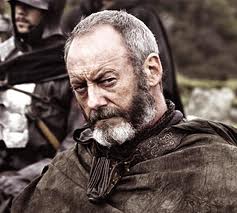
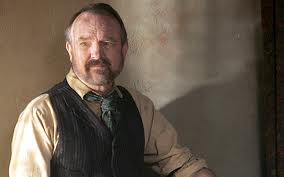
A better note to end on would’ve been Stannis having Davos dragged off to the dungeons and presumably scheduled for religious BBQ-ing.  That’s a character and relationship we’ve spent more time with, and it promises an immediately dire result that “hey…that guy!” can’t match as far as cliffhangers go.  I’d forgotten how great Liam Cunningham is in the role, and what a shame it is that no one has cast him and Jim Beaver as brothers in some sort of blue-collar family dramedy thing.

liam
 beaver

Stannis himself is looking run down and crazier than ever, and I’m not sure whether I buy Melisandre’s claims that she could’ve turned the tide at Blackwater.  But you know, once the horde of frozen zombies makes its way past the Wall, I think people might be more open to the ravings of a fire witch with a messianic warrior all ready to launch.  Still wouldn’t want him for my king, but for someone who looks to be near rock bottom, I think events are percolating that could give him another shot at the title.

But for now, and as usual, the best material is centered around King’s Landing, where the highest concentration of schemers and plotters and other totally different sorts of people are based.  Joffrey’s still wearing the fancy hat, but newly humbled after his pathetic showing at the Battle of Blackwater has lowered his respect level even further than when he was getting pelted with cow pies last year. Even humbled Joffrey is still immensely hatable, of course, sniping at his mother and being carted around the city in his ridiculous gold box.

Luckily for him, although it’s extremely doubtful that he realizes it, his new bride-to-be seems to recognize that he needs some PR turnaround at a grassroots level.  Marge Tyrell hasn’t had a lot of screentime previously, but she seems to be a match for Cersei when it comes to politickin’, and Natalie Dormer has been great so far, so I’m looking forward to her taking on greater prominence as the things move forward.

dormer

Elsewhere in the capital Bronn is, improbably, getting more awesome.  He’s no longer in charge of the City Watch, but he’s an anointed knight now and that just gives him more time to wile away in Littlefinger’s brothel.  He’s short on money, but that shouldn’t be an issue at least until Tyrion figures out how much he pays him anyway.  And he still has the ability to trigger a deus ex reprieve from a deadly confrontation just by reaching for the knife on the back of his belt, which seems like a useful trick.

Tyrion, meanwhile, has managed the tricky feat of succeeding downward.  Having saved the city and survived his sister’s assassination attempt, he’s enjoying exactly no glory to go with his nasty new scar and has been stripped of his power as the Hand of the King.  Even his father, who is nothing if not pragmatic, won’t spare him any credit and certainly won’t appoint him lord of their home manor.

dance

The scenes between Tyrion and his sister and father are upsetting, since he’s easily my favorite character and he’s mostly getting abused in them.  But they’re also the best of the episode, as Dinklage, Headey and Dance are (as always) uniformly fantastic.  God help me, I hope to never in my life receive a dressing down from Charles Dance.  The only thing better than his crushing of Tyrion’s hopes is the little nod Dinklage gives before he can finish his threat that “the next whore I find-”

 giant
Game Of Thrones episodes are patchwork beasts made of a half dozen disparate storylines, so they have a way of just ending on you suddenly, which “Valar Dohaeris” did.  That would be a serious criticism, if I wasn’t so rapt through every single scene of the episode, or rabid to see the next.  And not just because there’s every chance it will have FUCKING GIANTS in it.


Seriously, fucking giants.

Saturday, February 23, 2013

TORTURED LOGIC: THE UNSETTLING POLITICS OF ZERO DARK THIRTY

(This piece was originally published on Chud.com)


Zero Dark Thirty is up for a lot of Oscars this weekend.  It is also one of the most controversial movies in years, and one I have been mulling over a lot since I saw it.  It is a powerful, expertly-crafted piece of cinema, full of great performances and a climactic sequence that will likely be remembered and clumsily imitated for years to come.  It is, without a doubt, a Great movie.

But being Great is different than being Good.  Greatness speaks to the magnitude of an achievement, whereas goodness speaks to the inherent worthiness or nobility of that achievement.  And there’s a nagging possibility that Zero Dark Thirty is, like Oz, Great and Terrible.  It is of course possible to be both – it’s pretty much conventional wisdom at this point that movies like Triumph Of The Will or Birth Of A Nation were technical and innovative triumphs in service of repugnant themes.
Not that ZDT is on the level of those movies; it’s far too thoughtful and ambivalent about its own characters and content to be placed in the same category as straight up nazi/KKK propaganda.  I only bring it up to clarify that acknowledging the film’s considerable technical merits is a separate matter than judging it’s thematic content.  To sort out that whole mess, I’m going to need to talk through my personal beliefs as they relate to torture, the debate surrounding it, the manner in which movies affect public discourse, the responsibilities of an artist to society at large, and how this movie pits all of them against each other in some sort of moral-rhetorical Thunderdome.

And spoiler alert, I’m like, fully liberal, so if you aren’t you may want to take a quick drink and steel up your sensibilities, because the next bits may produce mild chafing.  The funny thing is, even if you disagree with the political views I’m about to espouse, the later sections are probably even more relevant to you, as you likely face the same sort of issues ZDT raised with me on some small or large scale with most movies that come out of the Gomorrah of Southern California each and every year.

ON THE MORALITY OF TORTURE

Torture is wrong. Full stop. And yes, waterboarding and other “enhanced interrogation” techniques are torture.  In the last 10-12 years we’ve pretended there is legitimate debate over this issue, when in fact it has all been clearly decided for over a century – US soldiers who waterboarded prisoners in the Phillipines were court martialed and the general who authorized it was dismissed from the Army by Teddy Roosevelt, even before we spearheaded the Geneva Conventions codifying torture as against international law,  and before we executed Japanese soldiers who did it for war crimes following WWII, and before our generals specifically designated it illegal again during Vietnam.
(note – This being an opinion piece and not an academic paper, a couple links are far from the definitive word on the subject.  I threw them up solely to demonstrate that I’m not pulling this stuff directly from my ass)

It has been a great moral failing on America’s part to have allowed the use of these techniques to be defended as valid methods of prosecuting the War On Terror.  I understand the reasons it happened, and there have been moments when I felt myself waffling on whether it was maybe okay to do it a little bit to people who really, really (probably) had it coming.  But I don’t kid myself about my motivations in those moments:  it’s not because torture is a tricky grey area, or because there are legitimate questions as to whether the types of abuse depicted in ZDT actually constitute torture.  It’s because I was scared.  That’s it. I was scared shitless following 9/11 and I wanted to be reassured that everything that could be done to stop it from happening again was being done.  I wanted to know that our protectors were going to Great lengths, even if they were Terrible ones.

But as a nation, I think it is fair to say, America should always be stronger than I am in my most cowardly moments.  And I believe the true measure of strength is in how we live or fail to live up to our professed ideals, and not in the scale or severity of damage we are capable of inflicting.  For the entire lifetime of the majority of Americans, we have possessed the power to destroy literally the entire world several times over if that was what we wanted.  We know no end of ways to inflict agony upon a helpless person.  We can do these things, easily.  It is the restraint not to do these things, even when frightened or provoked, that makes us great.

Maybe that’s too high-minded.  Perhaps it really boils down to this: the argument that we have to do these things to defeat this enemy strikes me as an admission of weakness.  I mean, motherfuckers came at us with box cutters.  I’m not saying shit isn’t serious, but if we’re so damaged by it that we don’t know how to hit back without shredding the Bill of Rights and Geneva Conventions, that to me tastes like admitting that we weren’t such hot shit to begin with.  It’s saying “look, we just aren’t strong enough to handle this unless we do all that stuff we told everyone was unacceptable to do no matter what the circumstances.”  I think that’s bullshit.  And no excuse anyway.  If your standards only apply when you are not under pressure, then guess what, you don’t actually have any standards.
I should really have just linked to Seanbaby and Batman making the same points in much more concise, hilarious fashion.

ON THE ACTUAL TORTURE DEBATE

That’s all well and good.  But while it’s all the reason I need to oppose torture, I also recognize the fact of the matter is that most Americans do not agree with me, or at least don’t feel very strongly about it.  So a great deal of the actual debate on the issue revolves around the murkier area of whether torture actually works as an interrogation technique.  For my part, I believe that torture is effective at getting you a lot of information, and fairly quickly. The question is whether you get accurate information from it, which (spoiler) in the movie it does.

ZDT, to be fair, actually does raise this issue in a brief moment or two, such as when it is eventually revealed that the identity of the courier Maya has been searching for has been in the CIA’s records for a decade, but no one else had been able to parse its significance amongst the flood of leads and info they gathered post-9/11.  I don’t think this is enough to introduce real ambiguity into the film’s presentation of torture, though.  If the sharpest critique of torture is that it is so effective that it’s difficult to manage the surplus of information it produces, I think you came down pretty squarely on one side of that issue.

There are other practical arguments against torture, of course.  But the film doesn’t touch at all on the effect a sanctioned torture program has on our standing in international affairs, how disastrous it can be when it produces bad intel (rather than useless info like the prisoner shouting random days of the week, which is a wash that leaves our heroes where they began), how it encourages our enemies to fight to the death rather than surrendering, or how even if only applied to foreign “non-lawful enemy combatants”, it sets an example for domestic law enforcement in how they might deal with especially difficult or unsavory subjects (if that seems like a stretch, there are documented cases of police departments using these techniques on citizens, including waterboarding, stretching back to the 1930s and further).

That’s not really a fault of the film, though, as most of that stuff lies well outside of the intently focused story it is telling.  It does not present a well-rounded overview of the torture debate because it is not trying to be a movie about torture.  And it isn’t, exactly, but it is a movie that condones torture.  I’ll return to that distinction and why it is significant in the next section.

The point is, while I hate that the argument over torture is based so much around whether it works rather than whether it should be beneath us as a people, I accept that as a practical reality.  America is far too accepting of torture in my view, and anything that makes it seem more like a reliable method of intelligence gathering is only going to exacerbate that problem.  Zero Dark Thirty does suggest that the use of torture was effective.  At the very least, it demonstrates that interrogations “enhanced” by prior acts of torture led to the major breakthroughs that led to Bin Laden. If you’re not apt to read between the lines even that much, it presents torturing prisoners as point A and a dead Bin Laden as point B, and the basic, inescapable logic of narrative cinema suggests that what happens at the end of a movie is the result of what happened in the beginning and middle.

This makes ZDT a pro-torture movie, because it ends with Osama Bin Laden dead.  And as much as the film goes out of its way not to sugarcoat the brutality of the operation (and somehow manages to make an utterly gripping sequence out of it without resorting to blatantly manipulative jingoism – don’t ask me how the hell they pulled that off) it’s impossible to desensationalize these events.  It is still the triumphant culmination of the hero’s struggles throughout the film, even if the final shots suggest that she feels somewhat hollowed out by finally achieving it.  If the intention there was to make the audience question whether the lengths she/we went to in order to get Bin Laden were worth it, I don’t think it succeeded in actually planting those doubts in anyone’s mind.

And look, even my bleeding-heartiness has limits; I’m not suggesting that this shouldn’t be in some way triumphant, or that the raid itself was wrong.  I’m against the execution of criminals without trial, but…well, it’s not like the guy was proclaiming his innocence or anything.  When you publicly take credit for the mass murder of American citizens and declare open war on the entire country, I’m totally cool with the gloves coming off.  Dude asked for a war, and that means less trials and more Black Hawks.

Anyway, the point I was making is that by the movie’s and vast majority of the audience’s estimation, killing Bin Laden = Good, so the movie depicts torturing people as producing a good result.  And the majority of America, whether they think we should be using it currently, does believe on some level that it’s use on Al Qaeda suspects was justified.  This is in no small part because the ends of those particular means included the eventual death of Bin Laden.

Given all those givens, the movie is ultimately pro-torture.  It may be agnostic as to the morality of the enterprise, but it comes down strongly on the side of its effectiveness, which realistically speaking is the area that plays the largest role in shaping the opinions of the general public.

SO WHAT? IT’S JUST A MOVIE

Okay, so let’s pretend that you agree with me that torturing people is bad and that the movie encourages its acceptance as legitimate tool of intelligence gathering.  The next question becomes so what?

So this creates a conundrum for me, the pinko movie geek.  I’m completely against censorship of any kind, but one of my biggest pet peeves is people crying censorship when they are simply being criticized.  Here’s the important distinction:  only the government can really censor things.  Nothing else is actually censorship; a network, studio or publisher isn’t required to help anyone distribute their works if they don’t want, and when people make fun of how stupid and terrible your ideas are, they are not infringing on your right to free speech, they are in fact exercising theirs.  So for the love of God and my own sanity, stop going online and whining “I thought we had free speech in this country???” every time some politician or celebrity catches flack over saying something idiotic.  We do have it, idiot, which is why we’re free to call idiots idiots when they’re being idiots.

This is not about censorship, it is about criticism, and while any time you say “this is bad” it carries with it the implication “…and they shouldn’t have made it,” that is very different from saying “they should not have been allowed to make it.”  I am not saying that Bigelow and Boal shouldn’t have the right to make the film they want, I’m saying that I wish they wanted to make a different one, in particular because they’re so goddamn good at it.

And I really don’t even want to do that, because part of my godless liberal agenda is to allow artists to make whatever art they want.  And I am generally contemptuous of the pearl-clutching mindset that would hold violent movies or video games to blame for whatever fresh horror some lunatic has found a way to inflict on his fellow men.  I don’t believe that is true, or that depiction of horrible or disgusting acts amounts to endorsing them.  I’m not worried about a rash of kids waterboarding their little brothers in the backyard, nor am I particularly worried about anyone who opposed torture being persuaded by the movie to switch their position.  Hell, I don’t even think “torture works!” is the primary theme of the movie, which tries pretty hard at not having a discernible opinion about it.

But one thing that always feels a little off with me is that when us fans of dark and violent entertainments sneer at the pearl-clutchers, we’re can be so quick to dismiss their position as silly that we end up denigrating the artform we love.  In our eagerness to distance our beloved slaughterfests from the actual slaughter of an Aurora or Newton, we end up in essence saying “they’re just movies!  They don’t actually matter!”

Which is ridiculous. I don’t think movies implant violent urges in otherwise peaceful people, but if they are really incapable of impacting people in a significant way, then why do we spend so much time watching and analyzing them?  Boring friends, family and strangers at bars with exhaustive diatribes about what a shitty script Prometheus has or how Jackie Brown is actually Tarantino’s strongest film despite being his only flop?  Spend our free time writing 4000 word essays about them on websites that take their name from schlocky horror flicks?

We wouldn’t, if we really believed that.  But we don’t.  We know movies matter.  Maybe not on the level that stuff like genocide, climate change, your mother’s love or a double shot of tar heroin on a cold Christmas morning matter, but we care about movies because they affect us powerfully.  And if something can affect us positively, it also has the ability to affect us negatively.  It has to.

But the question is really about how movies influence us.  As I said before, I don’t think they inspire acts of violence, and I don’t think that most movies that set out to sway people’s opinion on a specific subject really have much of an impact.  “Message” movies don’t change many minds, imo, not that ZDT is a message movie. No, I think that movies influence the public consciousness most powerfully not by way of the conclusions the story draws at the end, but in terms of what they take for granted while getting us there.

Let me give you a couple for instance-s.  To use a very specific example, I don’t think a ton of people are walking around fully accepting the conspiracy theory that JFK puts forward as the real truth of the assassination.  But I do think a lot of people have a totally warped view of who Jim Garrison was due to Costner’s portrayal.  To use a very general example, I think movies have been very influential in making overt racism more and more socially unacceptable over the years.  But I don’t think that is because so many racists saw Driving Miss Daisy or Crash and walked out thinking “man, that’s it, I’ve got to cut back on all this racisting.”  Don’t get me wrong, maybe movies like that did lead some people to examine their prejudices to some degree, and that’s great.  But I think that ultimately it wasn’t movies that set out specifically to end racism that succeeded in shifting the Overton Window, so much as a hundred other comedies and action movies and whatever that started using racism as a casual shorthand for establishing villains and assholes.  Those less ambitious flicks normalized the idea that racism = bad in a way that didn’t really brook argument, because the movies weren’t trying to build up to that point, they simply took it as a given and never stopped to let you think about whether to accept or reject it.

Which, I worry, is what ZDT will do for torture.  Again, I don’t think it’s going to change the mind of anyone who already agreed with me, but there is a very large portion of the population that is not enthusiastically pro-torture, but is sort of okay with it as long as they don’t have to hear about it too much.  A high profile movie reinforcing the idea that these practices get major results is only going to make it easier for those people to quietly tolerate it, even if it never comes out and tells us that torture is great.  In fact, it’s to the film’s credit that it doesn’t tell us anything about these highly charged real life scenarios.

But the most basic maxim of moviemaking, after all, is “show, don’t tell.”  And not for nothing; commentary of any sort raises our mental guard.  When a movie tells us something, we can choose to reject it.  But what they show us has a way of slipping past our defenses and influencing us in subtle, surprising ways.

WHAT SHOULD THEY HAVE DONE INSTEAD?

Complicating this issue further is that I have no idea how Bigelow and Boal, were they interested in catering to my personal political views (while obviously having no obligation to do so), could’ve addressed these issues while making essentially the same movie.  Because I take them at their word that they do not personally support torture, and that their goal was to tell this story as truthfully and objectively as possible.  They didn’t set out to make an apologia for enhanced interrogation techniques as a valid weapon in the War on Terror. They actually wrote an entire script before anyone knew what Seal Team Six was.  They were about to start production under the title Tora Bora, with the climax being the failure to capture Bin Laden in the titular valley a decade earlier, when Obama came on TV to tell us that we got him.

And I don’t know what the hell you do with your movie at that point.  Sticking with the original version isn’t an option.  Grafting a different finale on a movie that was initially about the failure of these tactics completely changes the thrust of the entire piece, and brings up all the issues I’ve been going over. Scrapping it and coming at it entirely from a new direction goes against your stated purpose of telling a true story as objectively as possible.  It would be admitting that no matter how conscientious you are about getting the facts right, you’re still manipulating the audience’s response to them by how you present them, how you choose what to focus on and ignore or omit.  That’s a thorny issue even for documentarians who have to edit entirely unmanipulated footage into a coherent narrative.  But these two especially seem intent on making highly realistic movies about hot button political topics while retaining a staunchly apolitical pose. It is just a pose, however; I don’t think you can engage meaningfully with such charged political issues without taking some sort of stance on them.

But it is important to note, I don’t think Zero Dark Thirty in its final form is factually inaccurate or even dishonest.  It’s probably much more accurate than most movies sporting the “based on a true story” label are, and as it applies to the issue I’m focused on, it does have the broad strokes correct.  There was a program of systematic torture in place within the intelligence community for several years, and eventually that intelligence community was successful in finding and killing Bin Laden. 
That does not justify it; certainly not morally, but even in terms of efficacy.  It took over a decade to produce that result, after all.  Maybe the leads that led to the Abottabad compound would never have been uncovered at all without torture.  Maybe we could’ve produced the same information with a cleaner interrogation program, but it would’ve been slower coming.  Maybe it would’ve been faster.  Maybe it would’ve been faster and the wars in Iraq and Afghanistan wouldn’t have burned as hot and long as they did.  We can’t know any of it for sure, because history only happened one way, and what it tells us is that abusing detainees didn’t stop us from (eventually) getting to him.

The distinction between correlation and causation is something we can debate in the real world.  There is simply not room to parse out that distinction in a narrative film depicting these events, however, because as I went over before, that structure is built on basic, powerful assumptions of cause and effect.  The type of assumptions that bypass our conscious critical faculties and appeal to our innate need to impose order and linearity to the mess of information we process every minute of every day.  That need has served us well as a species, as constantly looking for the cause to every effect has figuratively rocketed us to the top of the food chain, literally rocketed us to the moon, and made cheaper, more potent tar heroin available on cold Christmas mornings.

That need to make sense of things is also the basis for storytelling, and the unspoken pact between the teller and the audience.  What makes something a “story” is that it is what happens to the characters (be they real or fictional), but stripped down to the parts that matter.  This goes as much for surrealists like David Lynch as for naturalists like Bigelow.  As allergic as the former can be to linearity in his narratives, every shot in his movies is chosen for a purpose, because he believes it has some relevance to the whole.  And of course ZDT is not a surrealist piece.  It’s a straightforward, focused story, and if we are not to understand that the torture led to Bin Laden, then why exactly does it take up so much of the movie?

So in the end, we’re left with a movie that reinforces the dominate narrative of the torture debate, that it might be messy but damn it, it works.  Which is a message that I find to be genuinely harmful to our society.  So I wish it hadn’t been made.  But I would never want to stop it from being made.  I don’t want to hate it, but I can’t make myself like it.  And round and round it goes.

That’s not much of a conclusion, though, so I’ll end by saying this to anyone who loves the movie and thinks I’m an idiot for worrying about this stuff:  defend the movie, call me stupid, call my politics dangerously naive, tell me none of my opinions matter because I have no right to tell the filmmakers how to make their art.  Just don’t tell me that ZDT doesn’t have a stance on torture.  And definitely don’t tell me “it’s only a movie.”  Because a movie, that’s a hell of a thing.
…

TL; DR version:
Great fucking movie.  But kinda awful too.
Monday, December 31, 2012

BEST FILMS OF 2012

I did not see nearly enough movies this year for this to be anything resembling comprehensive or objective as a “BEST” list.   In fact, based on reactions I’ve seen from others, I fully expect that half of this list would be knocked off if I redid it after catching up on The Master, Holy Motors, The Raid, The Grey, 21 Jump Street, Amour, Chronicle and Zero Dark Thirty (god damn it Chicago for not getting in on the limited release).

This is just the best times I had in theaters this year.  Make of it what you will.

 10.  SEVEN PSYCHOPATHS

psychos

The reason this isn’t higher probably has less to do with how much better the other 9 movies are than it does with how much better In Bruges is.  Which probably isn’t completely fair, but this is my list and I didn’t promise anyone fair.  Martin MacDonough’s latest is not so relentlessly entertaining and definitely not as unexpectedly moving as its predecessor, but it is still frequently hilarious and definitely much bigger and full of ideas.  A lot of those ideas are treading over ground that Adaptation covered ten years ago, but I can see rewatching this a lot more than that one, since McDonough’s characters are constantly fun to spend time with, which does not seem to be a concern of Kaufman’s in his quest to eviscerate himself as thoroughly as possible on screen.  Which is all by way of saying that metafiction is usually not this much fun.

2012 Trend-watching:  Great performance from an aging actor prone to phoning it in (Christopher Walken).  Heavily metafictional.  Good movie that is disappointing as a follow-up to the director’s previous masterwork (In Bruges).  Harry Dean Stanton cameo.  Murder for hire.

Watch it for:  The Quaker Psychopath sequence

9.  SKYFALL

bond

I don’t know how to not make this sound backhanded, but Skyfall impressed me most with how much I liked it spite of it being a James Bond movie.  I’ve never loved Bond, and found Casino Royale to be pretty good rather than the revelation many folks seem to have, but I love Craig’s weathered, more brutish take on the character.  Throw in a supporting cast of ringers like Ralph Fiennes and Naomi Harris, a terrific villain turn from Javier Bardem, some actual meat for Dame Judi Dench to chew on her way out the door, and man-eating komodo dragons and you have an action spectacle that delivers on nearly every front.  The story, due to the focus on Dench’s M, feels weighty in a way that 007’s adventures rarely do, no matter how much peril the world is in.  And holy mother of god, do Sam Mendes and Roger Deakins shoot the living hell out of the exotic locations and beautiful people.  Whatever quibbles I might have about the on-the-nose references or awkwardness of trying to make the movie the capper to the “Bond Begins” trilogy while simultaneously examining how Craig’s incarnation is getting over-the-hill by 00 standards, a summer blockbuster this visually sumptuous is a rare treat.

2012 Trend-Watching:  Lowbrow material tackled with style and intelligence.  Heavily metafictional.  Murder for hire.  No one can make a movie under two hours anymore.

Watch It For:  The jaw-droppingly gorgeous skyscraper fight.

8. LOOPER

loop


Say this for Rian Johnson’s Looper: it’s not like anything else out there.  With it’s high-and-highly-complicated concept, act breaks that seem to begin entirely new movies, and moments of legitimately chilling horror, it seems perversely, almost compulsively non-commercial.  It’s a sci-fi thriller set in/around futuristic Kansas City, for crying out loud.  But it’s also thoughtful and inventive on a level that most sci-fi flicks don’t even aspire to, and even if the time travel mechanics are a bit wonky or the ending works more conceptually than emotionally, there are multiple sequences here that will stick with me for years, like Paul Dano’s character drawing just an incredibly short straw, or the 30 year montage.

2012 Trend-Watching:  Great performance from an aging actor prone to phoning it in (Bruce Willis).  Good movie that is a disappointing follow up to the director’s previous masterwork (Brick). Murder for hire.

Watch It For:  Emily Blunt stealing the show from two bona fide movie stars with half the screentime.

7. LINCOLN

linc

What’s most amazing about Lincoln is not that it’s good, it’s that it’s so frequently fun, without undermining the enormous historical import of the subject matter.  It’s realistic about the compromises and messiness required to pursue even the most lofty political agenda, while still managing to present the ability to compromise as something noble.  And that’s something that is hard to do in movies (our fictional heroes are heroes precisely because they make the principled stances we can’t be bothered to make ourselves), and even more so in politics, where any slight change in position is pounced upon as ideological weakness by opponents and the noisy fringe of one’s own party alike.  It’s not a perfect movie, although it would be close if it weren’t for the tacked-on inclusion of the assassination, but there is so much to love from Day-Lewis and the ridiculously loaded supporting cast that I can’t imagine anyone walking out disappointed.

2012 Trend-watching:  Elaborate period piece.  Slavery.  Great performance from an aging actor prone to phoning it in (Tommy Lee Jones).  No one can make a movie under two hours anymore.

Watch It For:  (arguably) the Greatest Living Director directing (arguably) the Greatest Living Actor in portraying (arguably) the Greatest American, and somehow living up to the challenge

6. ARGO

argo


Ben Affleck is the goods. He’s delivered three polished adult thrillers with no duds in a time when such movies are increasingly endangered by the continual encroachment of superhero and tween romance franchises on their natural studio habitats.  Argo’s Hollywood satire may be rather toothless (if amusing), but as a thriller and a window into an obscure, bizarre corner of American history, it’s taut and immensely effective.  I only saw one movie in 2012 (more on that later) that had the audience as effortlessly in the palm of its hand from the opening on, spending minutes on end in breathless silence before erupting in laughter or gasping in all the right places.  We’ve come to expect so little from brain-dead blockbusters that its refreshing to see one that can manipulate our reactions without insulting our intelligence.

2012 Trend-Watching:  Elaborate period piece. Heavily metafictional.  No one can make a movie under two hours anymore.

Watch It For:  The harrowing opening sequence

 5. MOONRISE KINGDOM

moon

I thought I might be over Wes Anderson after The Darjeeling Limited, which did nothing for me that earlier works didn’t do better.  But Moonrise Kingdom somehow managed to be a refreshing return to form from a guy who has never really changed his form.  Maybe it was the focus on actual children instead of manchildren, maybe it was actually setting it in the 60s instead of a hazy, old-fashioned feeling version of the present, maybe it was bringing in some fresh blood like Ed Norton, Frances McDormand, Bruce Willis and Tilda Swinton.  But for whatever reason, Moonrise Kingdom was funny and sweet and entertaining all the way through, and possibly the only movie of the year that I actually felt like ended too soon.

2012 Trend-Watching:  Elaborate period piece.  Great performance from aging actor prone to phoning it in (Bruce Willis, again)

Watch It For:  Incredible young actors Kara Hayward and Jared Gilman inhabiting the mannered Anderson style with as much aplomb and authenticity as any adult ever has.

 4.  DJANGO UNCHAINED

django

Tarantino’s latest massive revenge-of-the-oppressed epic/pastiche lacks some of the quiet, creeping intensity of Inglorious Basterds, but it is even bloodier (Django appears to be firing something closer to RPGs than actual bullets at the slavers), funnier (the Klansman bag scene is a comedic gift that just keeps giving), more gorgeously filmed (the shot of Big Daddy getting blasted off his horse that just follows its galloping legs was a particular standout).  I would rank it pretty low amongst Tarantino’s filmography, in large part because it goes on for too long after shedding its best characters, but then sitting comfortably alongside Reservoir Dogs is none too shabby a place to be.

2012 Trend-Watching:  Elaborate period piece.  Slavery.  Murder for hire. Good movie, but disappointing as a follow up to the director’s previous masterwork (Inglorious Basterds).  Great performance from an aging actor prone to phoning it in (Samuel L. Jackson). Heavily metafictional.  Seriously, no one can make a movie under two hours any more.

Watch It For:  Performances – Sam Jackson playing an actual character, Dicaprio rocketing miles and miles over the top, Jamie Foxx’s childlike rapture when asking Schultz to tell him the story of Siegfreid, but mostly watching Christoph Waltz own the screen like (insert tasteless reference to owning human beings as property here)

3.  THE AVENGERS


ave

The Avengers would’ve been a damn good time if it had gotten even two of its half dozen heroes right.  As it is, it is absolutely the biggest, best crowd-pleaser we’ve gotten in years, with something for any blockbuster, superhero or otherwise, to learn from. If I was doing a list of my favorite moments from movies this year, this movie would dominate it to an embarrassing degree.  Black Widow turning the tables on Loki.  The Galaga joke.  Hawkeye cheating to knock Loki off his sled.  The shawarma bit. Captain America taking charge of the final battle. Every. Single. Thing. The Hulk. Does

The Avengers doesn’t just validate the long game Marvel has been playing with its various lead-in movies, it makes me like all of them a little more in retrospect, which I’m still not sure how that even works.  Is it an “important” movie?  Not really.  But it is a fucking excellent one.

2012 Trend-Watching:  Lowbrow material done with style and intelligence.  Harry Dean Stanton cameo.  Jesus Christ, no one can make a movie under two hours anymore.

Watch It For:  The Other Guy.

2. CABIN IN THE WOODS

cab

The biggest and best surprise of the year (I don’t doubt Whedon or Drew Goddard’s abilities, but the 2 year shelving didn’t inspire confidence), Cabin got billed by some as the “horror film that kills the horror genre”.  I think that’s malarkey, though, as it’s a big, genuine love letter to the genre that flays and removes the pieces for inspection, but in a friendly way.  And it does metafiction the way I prefer, with those elements as allegory/subtext to a story that never betrays its own internal logic (it’s why as much as I liked Seven Psychos, I think Inception is a better “movie about movies”).  And it does have something to say about the genre and it’s cultural importance underneath the simple layers of reference and parody; the allegory here can be read as critical of audiences for being bloodthirsty slaves to convention, but ultimately the point is that we consume horrific entertainment as a way to engage with our darkest, most dangerous impulses without endangering the social contract. Horror saves the world in Cabin’s way of things; I’m not sure I buy that completely, but it’s not something that a movie interested in destroying the entire genre would put forward.

It’s also packed to the gills with terrific gags and payoffs and references for the horror fans in the audience.  The whiteboard alone is worth the price of admission for those folks.  And I didn’t even mention Bradley Whitford and Richard Jenkins or the speakerphone gag!  Truly this cup runneth over.

2012 Trend-Watching:  Lowbrow material done with style and intelligence.  Heavily metafictional.  Murder for hire.

Watch It For:    The merman.  We should all see one eventually.

 1. BEASTS OF THE SOUTHERN WILD

beast

How on Earth did a first time director make this movie?  Get this performance from a 5 year-old?  Capture these images, this specific sense of place?  Beasts is a difficult movie to describe, as there’s hardly a plot and the tone is at once dream-like and earthy.  And there are some political undercurrents that some have objected to, but I do not think the world of the Bathtub is depicted as unambiguously good or bad enough to get your partisan hackles up about.  This movie is not unabashedly fun like Cabin or Avengers, or expertly executed as Argo or tackling American historical atrocities head-on like Lincoln and Django, but it was the most unusual and moving time I spent in a theater this year.  More than anything else I saw, this was less of a film and more of an experience.

2012 Trend-Watching:  Beasts is such a singular piece of work that it does not have any of the elements I connected with the others.  Here’s hoping that the Aurochs kick off a trend of more movies in 2013 featuring antediluvian beasts.

Watch It For:  The performance of the year by young Quvenzhane Wallis.

Saturday, November 10, 2012

STAR WARS, NOTHING BUT STAAAAR WAAAAAAARS....

(This piece was originally published on Chud.com)

So, I don’t want to shock anyone, but there’s going to be more Star Wars movies.  And TV shows, and certainly video games and books and comics and all that jazz.  Now, I was as disappointed as anyone by the prequels, but I’m fairly optimistic about the prospects for a decent Star Wars movies.  It can be done.  By the time 2015 rolls around, there’s a good chance that I will have long stopped caring due to the deluge of news and rampant, uninformed speculation, but for now…how about some rampant, uninformed speculation?

Caution: Reading This Piece To The End May (Will) Result
 In  The Inability To Recall The Feel Of A Woman’s Touch

We know very little about the approach that will be taken to reviving this franchise, except that first on the agenda is episodes 7-9 (which is cause for some concern), so it could go any number of ways.  As a Star Wars fan, here’s a rundown of the mindset that I hope Kathleen Kennedy and those perverts at the Magic Kingdom are bringing to this, and the type of announcements that will give me pause in the build up that I’m already getting a bit sick of.

THE PEOPLE

George Lucas: He can be as involved or uninvolved as he wants at this point, and it won’t change my enthusiasm.  I don’t think I would want to be at this point were I in his shoes, after the astronomical amount of shit he took over the prequels.  But he’s not going to direct, so unless word gets out that he’s writing the scripts entirely by himself again, I’m not going to be too worried about the extent of his creative consultancy or whatever it ends up being called.

John Williams:  Dude’s old.  Get him working now.  Tie his granddaughter up and suspend her over a meat grinder if that’s what it takes to keep the guy composing new Star Wars theme music from now until he croaks.  That may sound a tad bit incredibly cruel to children and septuagenarian alike, but this is the only guy who, across all 6 films, never lost sight of what a Star Wars movie should be, and occasionally even made the prequels feel like one.

 
Sorry, Gina, but it’s for a good cause.

Directors:  It feels wrong, being even mildly knowledgeable about the craft of cinema, to downplay the importance of a director’s contribution, but if ever there was a case where a director didn’t matter, it’s this one.

That’s not to say they aren’t important, just that Star Wars, even more than other franchises, has a distinct and fairly rigid visual style that even a true auteur is not going to be able to stray too far outside.  For this reason, I don’t think we should actually hope for a Guillermo Del Toro or Darren Aronofsky or Alfonso Cuaron or even a Rian Johnson to jump on board.  I want to see what those guys produce on their own.  I want Star Wars in the hands of someone who is good with actors and can shoot a competent action scene. If they should have some experience producing or punching up scripts, all the better.

To that end, I love Tim Kelly’s suggestion of Drew Goddard, whose Cabin In The Woods was the best surprise of the year, and showcased an ability to simultaneously homage and deconstruct genre tropes while still being its own story with a consistent internal logic.  Star Wars is essentially a genre unto itself at this point, so a similar approach, lighter on the deconstruction but similarly faithful to the spirit, would be ideal.

Barring that, I’d be fine with Jon Favreau, Neil Blomkamp or even a Martin Campbell or James Mangold.  Hell, if his adaptation of The Stand should fall through, I’d be pretty happy with Ben Affleck taking on an episode, as he gets great performances from his actors, shoots straightforward, muscular action and has a geeky streak evidenced by his courting of various superhero projects and collaborations with Kevin Smith.  It would be a departure from the R-rated thrillers he’s made so far, but I think as a country we should have learned by now that we underestimate Ben Affleck’s ability to stretch himself at our own peril.

 
 "Seriously. Screwing Jennifer Lopez is widely
 regarded  as the low point of my career. 
That means I win."

Writers:  [I learned while putting this together that Toy Story 2 scribe Michael Arndt has been picked to write the first movie.  This stuff mostly applies to any episode or TV show or whatever they end up making]

This is, I feel, and even more important area than the director.  This is where Goddard would double up, as he is a great hand at it and could potentially bring in some of Joss Whedon’s (who would himself be perfect for the job as I just described it if he weren’t busy godfathering the other humongous multimedia sci-fi adventure franchise in its big and small screen forays) Mutant Enemy writing stable to lend their hands.  ME’s defining characteristic, to my mind, is mixing comedy into fantasy/sci-fi without undermining the sense of real stakes.  The original trilogy might not be a laugh riot exactly, but that sensibility is exactly what the franchise needs after the frequently airless prequels.

I’m not worried about this, though, as the geeks are ascendant in the biz right now, and I’m sure every writer in Hollywood is clamoring for a chance to do Star Wars right this time.  My one big worry would be that there will end up being too many cooks, if the producers can’t resist letting everyone who has sold a script in the last 10 years take a crack.  My other would be that it ends up in the hands of Damon Lindelof, who is a worthy successor to George Lucas in that he comes up with great ideas, and created such a seminal property that it is difficult to reconcile such an impressive imagination with such a poor hand at the nuts n’ bolts of storytelling (that last season of Lost fails terribly at a lot more than justifying its own mythology, and then there’s Prometheus…).

"My God, It’s full of on-the-nose thematic dialogue
 and unresolved plot developments…"
The Stars:  For starters, a helpful hint to Disney: for all the new roles, cast unknowns.  People didn’t come back for prequel after disappointing prequel because of Natalie Portman.  The actors are not the draw when it comes to Star Wars; save yourself the budget and don’t pay someone established to be Ben Solo.

The exception to this:  the Villain.  Pay whatever it takes to get the director’s first choice for the new Sith Lord.  By setting Ep. VII close to ROTJ, you’re already in a hole in this regard.  The prior episode saw the death of the most iconic villain in the history of cinema, and the archetypical evil puppetmaster to boot. Those are ridiculous shoes to fill under any circumstances, and if the main evil force is Imperial holdouts, you’ve compounded it.  How big of a threat can the remnants of the Empire be when the heroes toppled it at full strength last time?

Shell out the bucks for the bad guy.  He’s going to be the single most important factor in making this work.

Now, about the alumni…
The first batch of rumors have surrounded the potential involvement of Mark Hamill, Carrie Fisher, and Harrison Ford.  Of course they’re going to show up in some capacity, but the question is how, and by implication, why.

The obvious answer is that they played these iconic, beloved characters and it would be crazy not to have them show up for nostalgia’s sake.  Here’s my take on that: these movies are going to be largely powered and defined by nostalgia for the originals no matter what, so there’s not much need to actively court it.  To that point, the worst thing they could do is have the original trio be the protagonists of the new trilogy (or even the first entry in it).

I wish this being such a bad idea was completely self-evident, but we live in strange, self-indulgent times where well-off white kids enjoy an extended adolescence well into their twenties (yo!), and well-off white filmmakers defer their mid-life crises until their 60s, then drag the iconic characters of their youth back to the screen to sort them out.  Not that it isn’t possible to make a decent movie about an aged Rocky Balboa, but in execution it seems like these movies go out of their way to show how Rambo or Indiana Jones or John McClane can kick just as much ass at 60 as they did at 30, which always comes off as affected and faintly sad to me.

Of course, The Expendables seems to be gaining steam as a legitimate franchise, and they just got Dolph Lundgren and Van Damme both back for a Universal Soldier reunion two decades after the fact, so maybe it’s me that’s strange for not enjoying old men pretending to kick 20 year-old ass more.  But even if I’m selling the concept short, Star Wars is a young man’s game.  It was a phenomenon because it was a movie that genuinely worked for kids 8 and (all the way) up, and I think it hit a sweet spot there because it mixed in a genuine reverence for the wisdom of age, while still being driven by the youthful energy of the core cast.  Youth and energy being two words that have not appeared in the same sentence as “Harrison Ford” since 1988, I think it would be a mistake to have older versions of those characters be the driving force of this new story.

What about recasting with younger actors?  No.  At that point you’re inviting all the unflattering comparisons to the classic style, but losing the sentimental attachment that is the only reason to stick with these characters.  Just no.  It’s only a slightly worse idea than digitally de-aging them Tron: Legacy style, which will have all the sadness of watching the stars try to recapture their youthful spirit with the added bonus of rubbing the uncanny valley all up in our shit at the same time.

The Characters
All that being said, there is ample precedent for a wise older jedi role in the series for an older actor, and that would be a natural progression of Luke’s character.  Just remember that his role should be that of Obi-Wan in Ep. IV, a revered mentor figure for the actual hero(s), not Obi-wan in Ep. I, an underwritten and fairly inessential side character elevated to quasi-lead because of preexisting familiarity with the fans.

 
 Pictured:  one of the crudely rendered, racist 
caricatures that is more important to The Phantom 
Menace‘s plot than the trilogy’s “hero”

There’s also precedent for an elder maternal political leader, which Leia could fill in some fashion.  But that’s a really ancillary role, and begs the question of whether it’s worth bothering to draw our attention to whether Carrie Fisher remembers how to act after 30 years of public struggles with addiction.  And as for old Han, ugh, no.  That is not a character designed to age gracefully under the best circumstances, much less when the actor has developed as acute a shit-giving deficiency as Ford has these last…well, a whole lot of years.

What I’m getting at here is that there will need to be a new crop of characters to carry a new franchise that will justify its own storyline, rather feeling like a postscript to the existing films.  Because what this trilogy should absolutely not be is a sequel to the OT.  It’s too late for that, and more importantly, they don’t need it in the first place.  Whatever criticisms can be leveled at ROTJ, it is definitively an ending.  I’m pretty sure Disney understands this on some level – I doubt they thought that people were just so desperate to check in on Princess Leia at age 60 that it was worth a billion+ dollars (plus another for each of her lil’ buddies) for the right to tell that story.  For as packed with lame fanservice as it will likely end up, Ep. VII’s primary goal is to kick off a new story that people will want to follow through an entire trilogy, and beyond.

To do that we will need new heroes, although you can have the droids and Chewie around in essentially the same old capacity, since those costumes don’t age like regular folk.  This will probably mean a hatch of fresh-faced Solos and Calrissians, although for reasons I’ve expounded on I think they should distance themselves from the earlier characters.  But the incestuous (in all senses) nature of the Star Wars galaxy is almost an established part of the formula at this point, so it’s probably inevitable.

Still better than Jar-Jar and Watto

Anyway, like I said before, you can cast unknowns here and can even get by without finding a bolt from the blue like Marvel did with Chris Hemsworth.  Because the little secret here is that the characters are not the draw to this series.  Don’t get me wrong, they can’t be bad, and they should be great, but these movies could be massive successes even if they don’t rise past serviceable.
By now you might be shaking your head, wondering what the hell it is that I think makes a movie good if the director and actors and characters don’t matter that much.  I should note that for every other movie these are the most vital components to making something watchable, but Star Wars is its own thing.  And the real appeal of the Star Wars brand is…

The World 

Star Wars has not endured 35 years of shitty novels, comics, video games and eventually an entire new trilogy of high-profile shitty movies on the strength of the characters of Luke Skywalker and Princess Leia, or even more colorful ones like Han Solo and Darth Vader.  Those were factors, but the bigger one, the one that drives the biggest, most diverse array of Expanded Universe materials of any franchise ever, is that the galaxy far, far away was such an appealing place.  It was more than a world, it was an endless series of worlds, teeming with laserswords and Cloud Cities and evil overlords and magical space samurai and bounty hunters with jetpacks and lovable sasquatch sidekicks and Billy Dee Williamses and 40 varieties of spaceship and Lobot.

 
Motherfuckers love them some Lobot

The thing about the Star Wars universe is that it’s a place where literally anything can happen.  A new Star Wars movie has to have a few things – an opening crawl, Across The Stars, lots of wipes, robot sidekicks, someone having a bad feeling about something.  But the story could be anything.  It could be your standard Campbellian Chosen One epic.  It could be about a mob war between space slugs and yetis.   It could be a Magificent Seven riff on a frontier world, or an Aliens riff on an abandoned space station, or a Die Hard riff on a Star Destroyer, or a heist film a la Ocean’s Eleven where the crooks have literal magic powers instead of just being impossibly cool, or a noir riff with a jetpacked bounty hunter playing the Sam Spade role, or a hard-nosed military drama following Rogue Squadron, or The Bourne Identity where the amnesiac can move things with his mind.  Terminator where John Connor has a squidhead.  The Great Escape on an unstable asteroid prison. Jaws with a giant sandworm.  The Dirty Dozen with cyborgs and green muppets and smugglers and fishmen.  Mutiny On The Executor.  Dances With Wookies.  A buddy cop movie where Murtaugh is an android and Riggs has a human butt for a chin.

 
 “Diplomatic Immunity, my faceass!”

Basically, any movie that features gangsters, aliens, wizards, cowboys, samurai, zombies, or robots (so, all the good ones) can be worked into the Star Wars universe.  George Lucas did something back in 1977 that I’m sure would’ve been impossible if he had set out to do it specifically.  He fused sci-fi with fantasy, and through some mysterious alchemy, created a potent hybrid with all the myriad story potential of both that somehow appealed to mainstream audiences that don’t have much taste for either.  It was a world so vibrant, so teeming with life that seemed to extend for parsecs past the edge of every frame, that people didn’t care much that the dialogue could be clunky and the lead was a bit whiny and bland (he did get better as the series progressed!) and kinda wanted to pork his sister. That world is so overflowing with potential that it hardly seemed to matter that the prequels were flat out bad, and didn’t take advantage of it, instead focusing intently on familiar characters and setting up the things we already know all about.  It’s why even though I don’t like a one of them, I can’t write off the possibility that Ep. VII might actually be good.

It’s also why I’m not interested in seeing how Han and Leia are doing in retirement.  Do something else.  Do anything else, because if you can think it up, it can fit in Star Wars.   It’s too bad that Ep. VII has to be, well, Ep. VII, because it suggests that it will be trying to tie things fairly tightly to the prior series, most likely to its detriment.

I may not be able to still care when it comes out in 2015, but for now I’m trying to be guardedly optimistic.  The news that will really perk me up, though, is when it is announced that the next movie/TV show in development will be set far away from the previous ones, like 100 years + past the OT, or way back in the era of the Knights Of The Old Republic games, thousands of years before The Phantom Menace.  Something with that distance would be freer to be its own thing, and function as a homage to the originals, focusing on recreating the spirit and intangibles that made it fun and resonant rather than getting bogged down in hyper-specific references and servicing characters who received perfectly good resolutions in 1983.  To get a story that is new and exciting while having a feel that is familiar and inviting.  That’s the best we can hope for, I think.  The worst…well, the worst is that we get another crappy blockbuster or two and a giant corporation is out a couple billion dollars.  Call me crazy, but I don’t think I hate these odds.

Tuesday, September 4, 2012

BREAKING BAD 5.08 - "GLIDING OVER ALL"

This post is a day later coming than the prior seven, and while you might assume that the holiday has something to do with that, the truth of the matter is that the mid-season finale left me supremely conflicted.  I’ve spent the last two days wrestling with this question, and still remain undecided: would a nice wet plop over the executive producer credit have been a perfectly hilarious capper, or the stupidest fucking thing anyone could ever have done, anywhere ever?  Leave a comment below or a post in the message board thread to weigh in.

Our cold open this week focuses on the clean up from Mike’s murder, and despite actually seeing it happen last week, it was somehow more upsetting for me to see the barrel for the old man’s body be laid out.  I don’t know why, as I’m not usually sentimental about mortal remains and have no opinion as to whether my own are buried or burned or reanimated with voodoo to help Andrew McCarthy’s grandson find buried treasure.  It not just me who seemed more taken aback by the aftermath than the actual event (like most fans, I had Mike at the top of the dead pool), though.  Walt looks drained of the exhilaration he felt after he “won” with Gus, and even exhibits what seems to be actual regret.  Which fits with my reading that Walt has been disappointed not to have a Fring to scheme against this year, and found that as much as he tried to push Mike into that antagonistic role, it just wasn’t the same this time around.  Like that other great tragic hero of our age, Charlie Sheen, he’s found that winning all the time is a good way to find yourself fucking up good things just because you want to see what happens.

Speaking of things being too easy to maintain Walt’s interest, the mass murder of the 10 guys goes off without a hitch.  Walt throwing in with neo-nazis to pull it off is, if not a new low per se, certainly a new type of low for the character.  But, after spending about 3 minutes extracting the names from Lydia (who drops a new, ready-to-roll international distribution system in his lap while she’s at it, yawn), planning the deed itself can barely hold his attention.  He seems to put on the figurative Heisenberg hat only briefly at the motel, almost as an afterthought.  The show is obviously operating in a completely different gear these days when you look at how disposing of two bodies was a two episode ordeal back in season one and now a complex web of ten assassinations across three prisons within a two minute window is planned in one scene and carried out in one (stunningly executed, exceedingly brutal) montage.

All of this is leading to Walt’s momentous but again surprisingly easy-to-accomplish decision to quit the business in the last third of the episode.  This fits with the decompression of the show that has been my biggest reservation about this season.  With no dire need for the money or outside influence enforcing a cooking quota, the gang’s adventures have been interesting and darkly funny as per usual, but really, if they needed to spend 3 months planning the train heist, there was nothing stopping them from doing so.  Along with no longer needing to hide anything from Skyler, who was at least technically exhibiting all the symptoms of rigor mortis for the last 5 episodes, this led to a noticeable downshift in intensity for a show that had always distinguished itself as having the tightest screws on television.  Along with the sidelining of important characters like Saul, and especially Jesse, these are the reasons why despite some great stuff in these last couple, this 8 episodes has been the weakest stretch of the series in my opinion.  Not actually weak, mind you, just not quite strong enough to edge out Game Of Thrones as the best thing on TV this year.

But let’s get back to the good stuff.  The most interesting thing about this episode is how it is almost structured as a mock-series finale, in some alternate universe where the show could end with Walt retiring voluntarily and dying in peace.  There are callbacks galore, and in fact, let’s just stop and list some of them:  Walt fixates on a fly again, as well as a familiar painting and a paper towel dispenser he’d previously accosted, he and Jesse reminiscence about their RV, the most extensive meth-cooking montage since “Four Days Out” and all the familiar imagery that comes with that, shots of Walt in the shower and laid out on a medical slab coming out of the EKG or whatever machine that are almost exact recreations of things we’ve seen before, mention of Horace Shapiro, Junkyard Attorney getting rid of another incriminating car, multiple time-lapse shots of suns rising/setting, a signature ricin pump-fake (a move that has come to occupy the same space in BB’s arsenal as the skyhook did in Kareem’s), and of course, Leaves of Grass.  We’ll get back to Leave Of Grass.

For an episode that spans a larger amount of time than most entire seasons and features the biggest power play by our hero yet, this was surprisingly quiet and almost contemplative.  As I mentioned before, the mass murder plays out almost as an afterthought to getting rid of Mike, and Walt is not racked with nerves before or flush with triumph afterward.  He plans and pulls off this operation that the nazi notes is more complicated than offing Bin Laden, mid-episode, and then essentially plays out his ride into the sunset, reuniting his family, making things “right” with Jesse, and extract himself from a massive international criminal operation with tens of millions of dollars and seemingly not a peep from his co-conspirators.  Okay, it seems like his cancer is out of remission, as it must be eventually, but for the most part it’s all coming up Millhouse for Mr. White.  He’s even enjoying  a quiet dinner around the pool with the entire family again, a prospect which seemed completely out of the question just a few episodes ago.

And then Hank takes a dump.

I love this so much.  And not just because watching bald middle-aged men quietly excrete is sort of my “thing”.  I just find it soothing in a completely non-sexual way, and Dr. Schleisser says that as long as they know they’re being filmed no one is getting hurt, so maybe you’re the one who is perverted for thinking it was something dirty, huh Mr. Judgmental?  But I digress. A lot of people, including myself at some points, speculated that (toilet setting aside) this would be exactly how we would enter the mid-season break, but that doesn’t make me any less delighted that they went there with time to actually explore how this changes the basic fabric of the series, and that the thread that unravels the biggest secret on the show goes back to dear, departed Gale Boeticher’s guilelessness.

How will Hank react?  Will he begin his own covert investigation to confirm his suspicions?  Will he confide what he knows to Marie, or Gomez?  Or will he confront Walt more or less immediately?
I’m preparing myself for the first option, as it would maintain something closer to the show’s prior status quo, albeit with Hank now hiding a secret from Walter in their interactions.  But I’m hoping he comes directly to Walt, as I could see him spinning a lie that he cooked one or two batches to try to leave his family some cash, and then paint Fring and Mike as the big villains that forced him to keep up the production with threats to his family.  It could be just plausible enough to make Hank not want to torpedo his career by turning him in, which could lead to his reluctantly helping Walt when the Phoenix/neo-nazi/Madrigal folks come looking to pull him back into the trade.  That would be an entirely new dynamic, and one I would love to see.  And that might be the most impressive feat of these 8 episodes; as much as I found the individual entries less compelling than their predecessors, I never got any less eager to see what comes next.

It’s going to be a long year before we fade back in on Hank sitting on the toilet, that’s for sure.   I don’t have a real clear impression of how many people actually read these things; I have gotten a handful of comments that have been uniformly positive, which is gratifying for sure.  Anyhow, I hope everyone comes back for season 6B, and if not, thanks for reading, hope to see you next year, and may you maintain at least a 96% purity in all of your endeavors.

Estimated Profits: + $62000 + multiple millions from all the deals in the montage.  It looks like Walt has finally got himself securely in the black from all the blue he’s dealing.  And he only had to murder 22 people and indirectly kill about 200 others to do it!

Murders – Emilio, Krazy 8, Jane, two of Gus’s dealers, Gale Boetticher, Gustavo Fring, Tyrus, Hector “Tio” Salamanca, two other Fring goons, 14 year-old arachnophile Drew Sharp, Mike Ehrmantraut, Dennis the Laundry Manager, Dan the lawyer, 8 more of Mike’s guys

Collateral Damage – One innocent janitor loses his job and goes to jail on a bullshit marijuana charge.  Hank had to kill a guy, even if he was an insane, degenerate piece of filth who deserved to die, giving him fairly severe PTSD.  Combo was killed dealing for Walt.  Jane’s father’s life is utterly ruined.  167 passengers on two planes are dead.  Skyler is forced to become an accessory after the fact (or take down her son, sister and brother-in-law with Walt).  3 broken Pontiac Aztek windshields.  Jesse’s RV is destroyed. On their mission to kill Heisenberg, the Cousins kill 9 illegal immigrants and their coyote, an old woman with a handicap-accessible van, a grocery-shopping bystander, an Indian woman and the Reservation sheriff that investigates.  Also they shoot Hank multiple times, forcing him through a long, painful physical therapy process.  Andrea’s kid brother is murdered by Gus’s dealers due to trouble Jesse and Walt stirred up.  Jesse murders Gale, crushing him with guilt and destroying his hard-fought sobriety.  Gus murders Victor to send a message to Walt and Jesse.  Three Honduran workers get deported (or maybe worse).  Walt purposefully wrecks a car, straining an already-injured Hank’s neck in an unspecified fashion.  Ted Beneke breaks his neck fleeing from Heisenpire goons.  Brock is poisoned and nearly dies.  Tio blows himself up, but no one’s weeping for that vicious old fucker.  The staff of an industrial laundry is out of their jobs.  Dozens (hundreds?) of criminal prosecutions are compromised when the guys wreck the APD evidence locker.  Hank’s boss gets pushed out of his job for his failure to apprehend Fring or Heisenberg.  Herr Schuler, Chau and a low rent hitman get offed as Lydia scrambles to cover up Madrigal’s connection to Fring’s drug empire in the wake of his death.  Walt manipulates Jesse into breaking up with Andrea.  Mike’s lawyer is arrested, depriving his favorite banker of sweets.  Hank has that last great pleasure of a middle-aged man, a quiet, leisurely excretion, ruined by one of histories greatest monsters.

Heisenberg Certainty Principle – “It can be done exactly how I want it.  The only question is, are you the man to do it?”

Best Lie – “I used to love camping.”  I don’t know why, but I just feel like Walt has never been an outdoorsman, and this is just the first thing that came to him to fill the silence.

Official Walter Jr. Breakfast Count: 15.  The kid has been absent from several episodes now, to no one I know’s consternation.  People may loathe Skyler, but no one even cares about Flynn.

We Are Done, Professionally –  Jesse actually stays out, even after getting a nostalgic visit from Mr. White.  Good for you, Jesse.  You are going to suffer so damn much in the final 8 episodes, but still.

It’s The Little Things – Son of Fly!  Lydia getting hung up on Walt ordering coffee to make their meet “play better”.  Todd’s quick “Okay!” when Walt says he doesn’t want to talk about Mike’s body.  How the bag Todd drops on the scale at the beginning of the meth montage tumbles off (suggesting just a little bit of ineptitude that might try Walt’s patience working with Not-Jesse but not overplaying it).  Skyler mentioning that her laundering operation has essentially been reduced to spraying a giant pile of bills for silverfish.  The way I can’t shake the feeling that Walt was disappointed not to be able to poison Lydia, not because she is an unacceptable loose end, but because he’s thinking “Jesus, I’m never going to get rid of this stuff!”

Random Retrospective Thoughts On Season 5A:  I never came around on Lydia, so having her be such a big supporting character does not sit great with me, particularly when it comes at such a steep cost to Saul’s screentime.  Jesse and Skyler (outside of her showcase episode) were also really marginalized compared to prior years, although I suppose I appreciate the attempts to make Jesse feel important to the proceedings by having him come up with the ideas for the two big heists.  This tips things in favor of Mike, who needed the added characterization as his story wound to a close, and Walt, who is as focal here as he has been since the first season.

This makes a similar sort of sense, as the show is his story and it is also winding down, and because the issues he’s facing here are not quite as accessible or primally motivating as finding out you have a terminal disease or feeling poor and powerless.  Not to go on an economic tangent here, but most of us feel so far from the top right now that we probably need to be walked through getting there and not feeling particularly interested being there anymore in order to understand it.  But still, to have the character retake the spotlight at a point in his journey where I find him the least interesting and sympathetic does not make for the most gripping of episodes.  Really, what this underscores for me is what a brilliant move that opening flash-forward was, as without it I think I would’ve been much more critical of the show feeling aimless in this stretch, idling around with Walt in triumph, with less to hide and fear than ever before while other established characters languish on the sidelines.  But with that destination in sight, the sight of Heisenberg ascendant takes on a different, more purposeful flavor.  What might have seemed like pandering to the crowd that wanted Walt to be Scarface from season 1, episode 2 is instead recognizable as sowing the seeds for what looks to be a long, ugly fall.